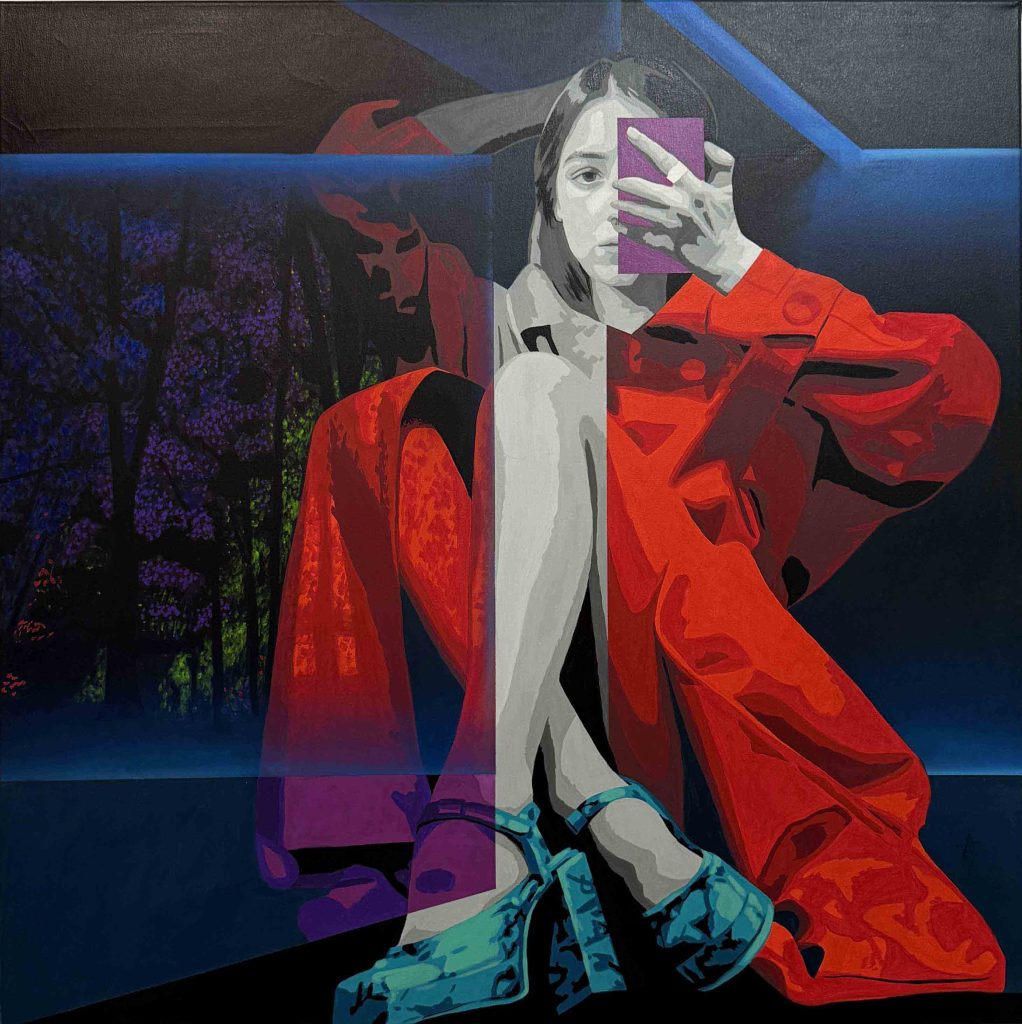
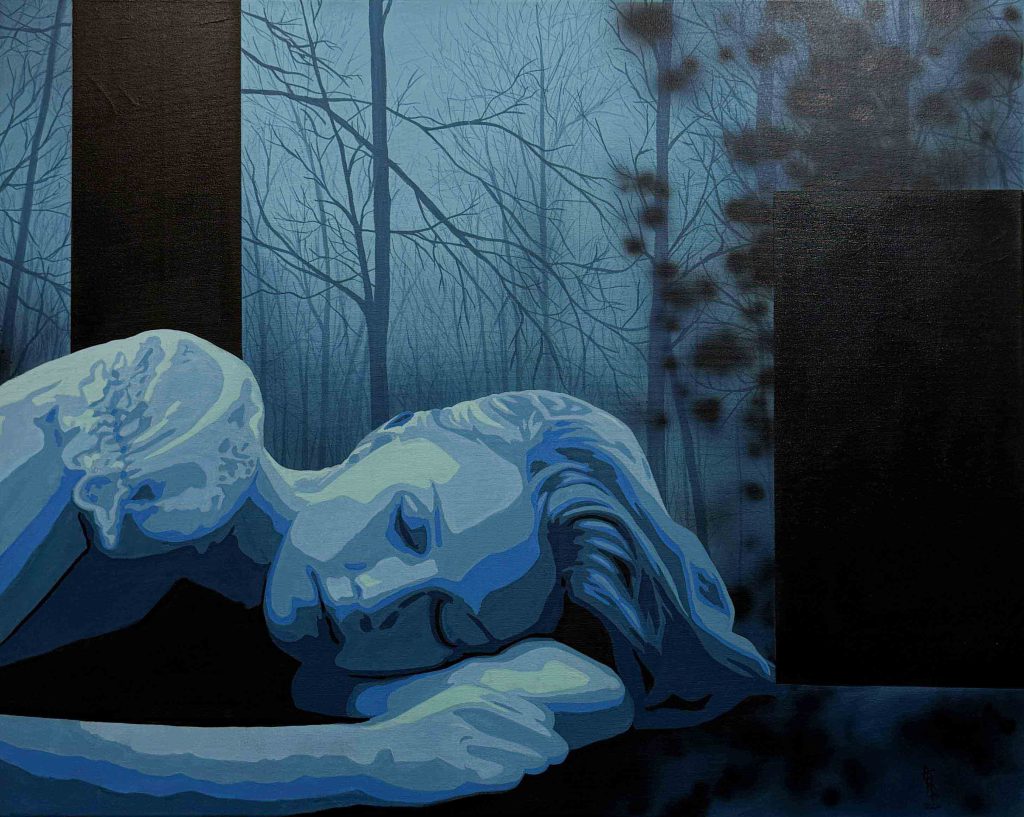
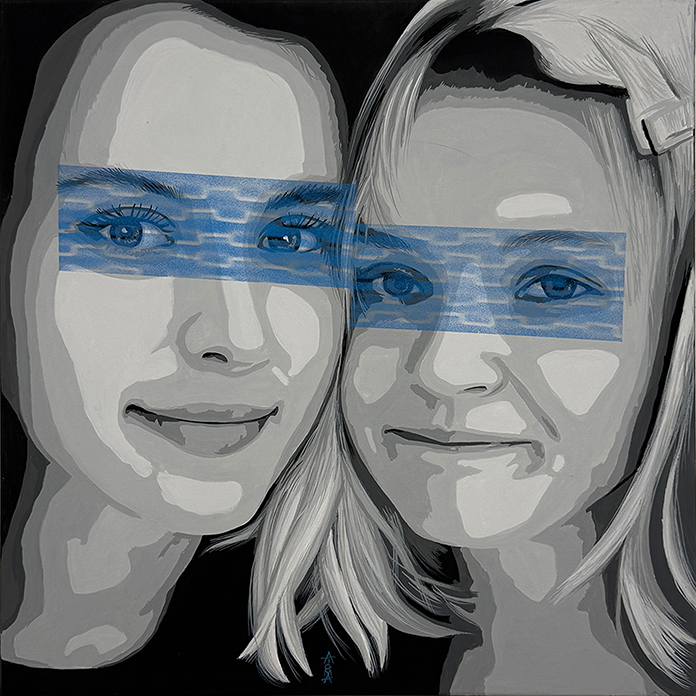
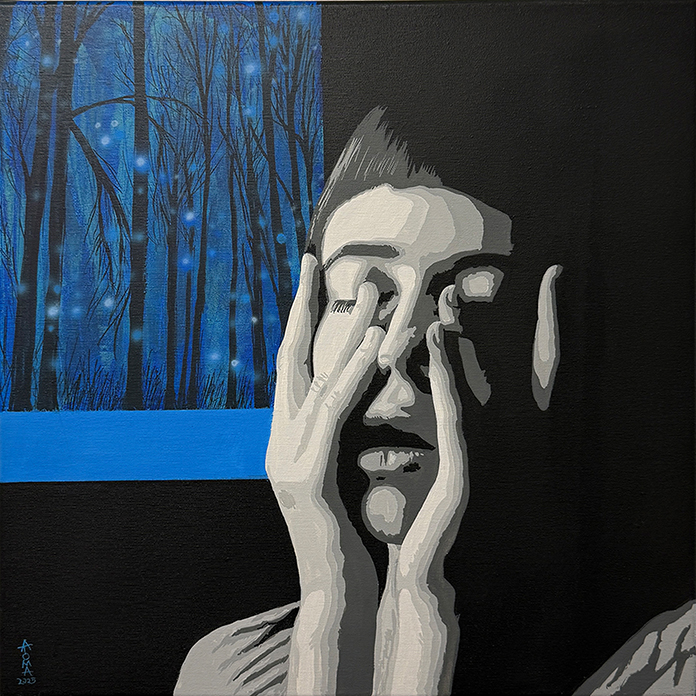
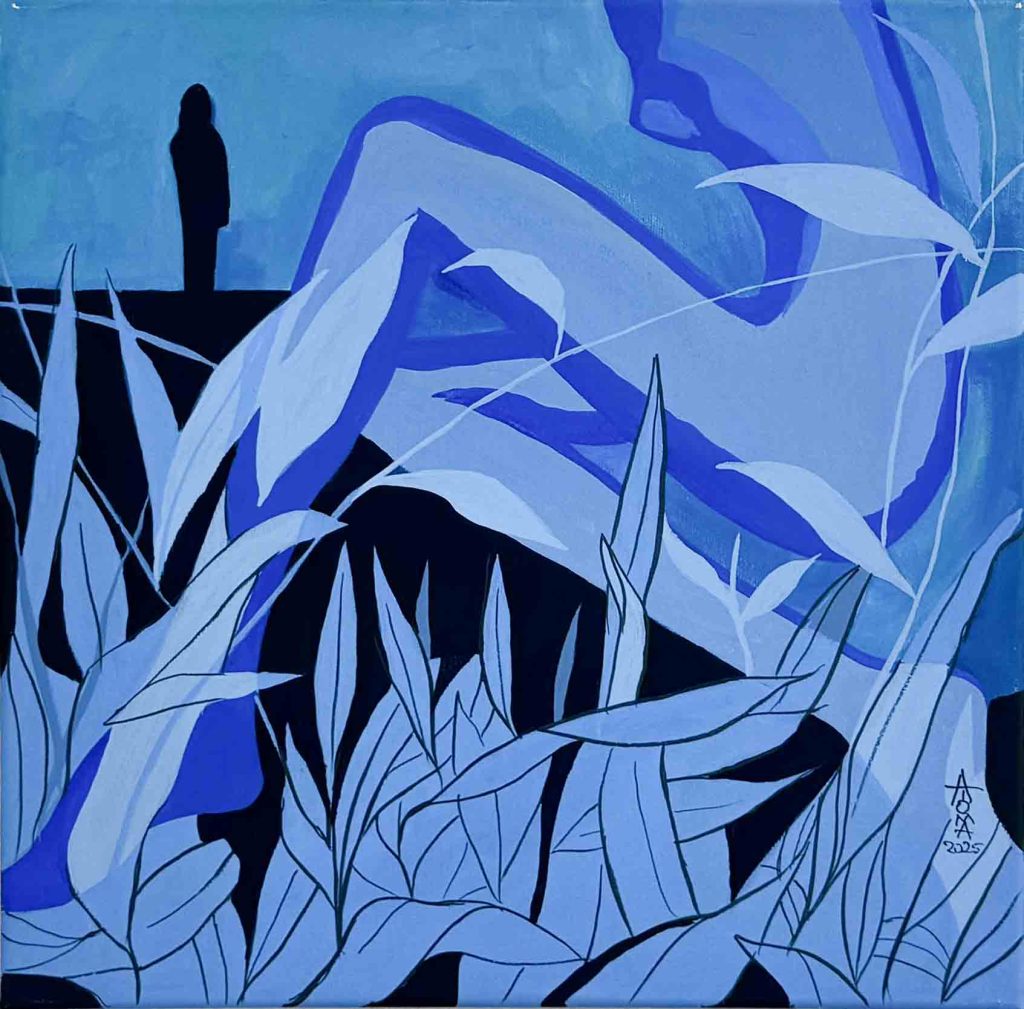
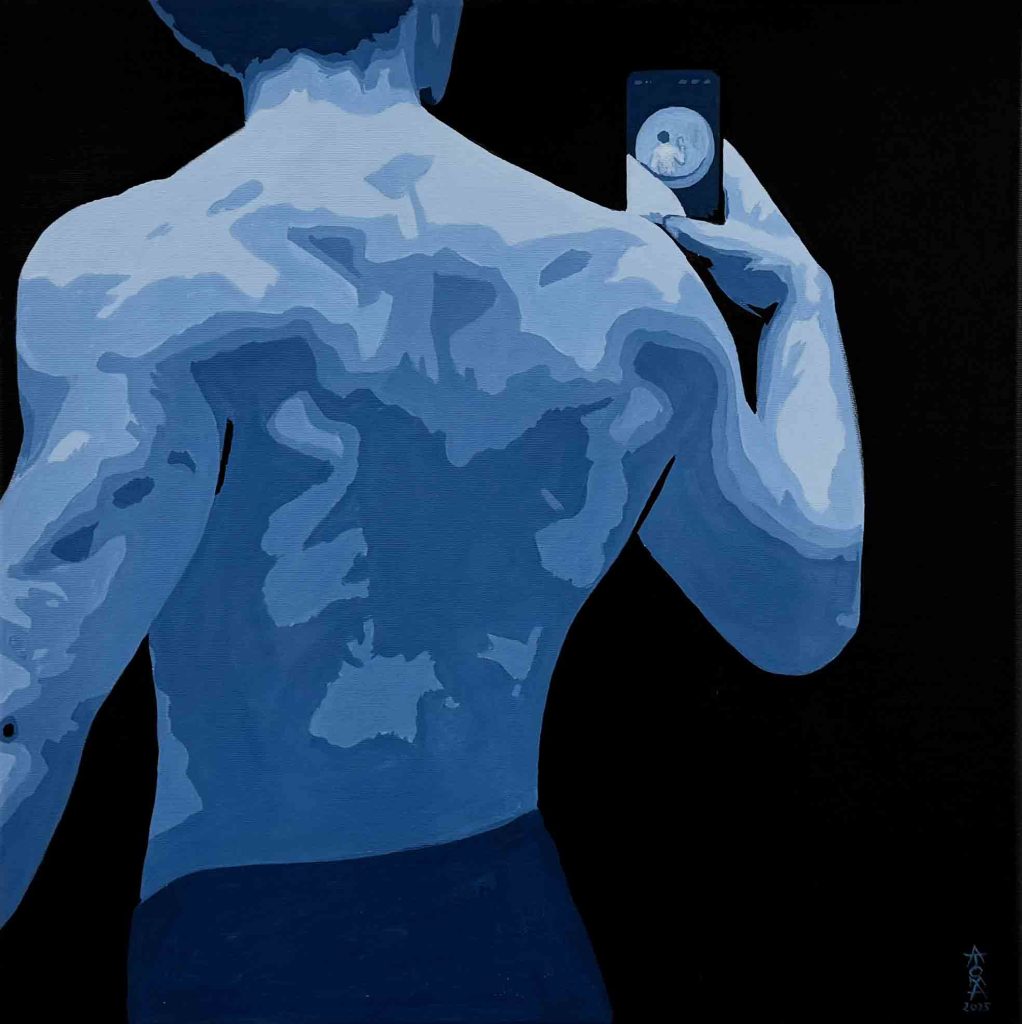
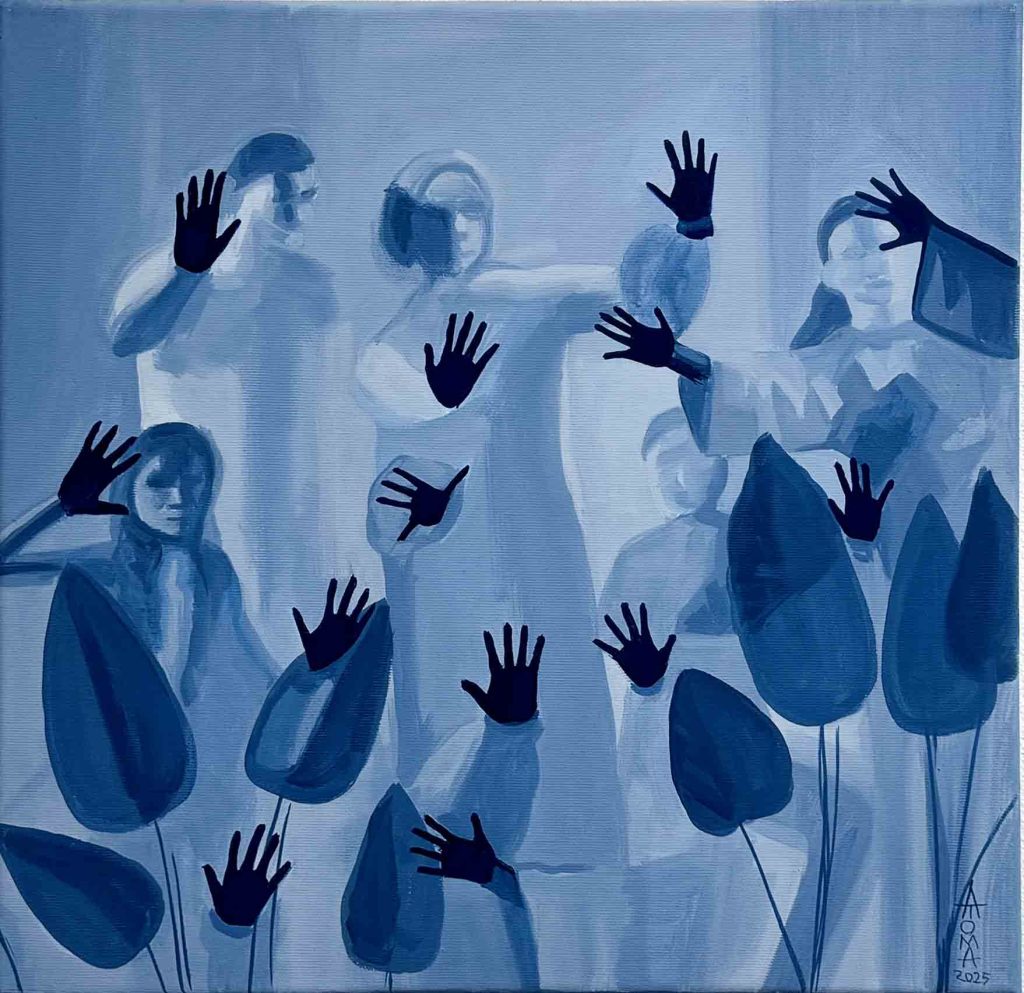
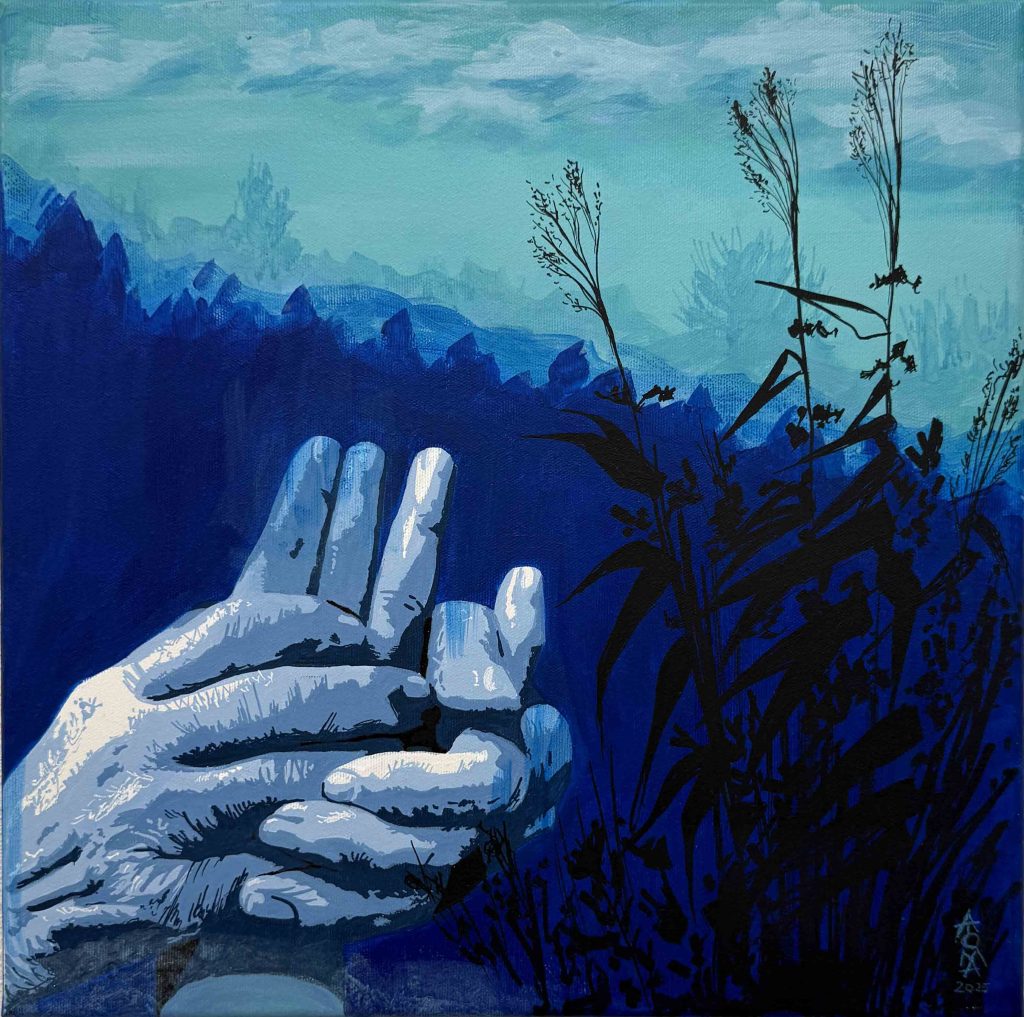
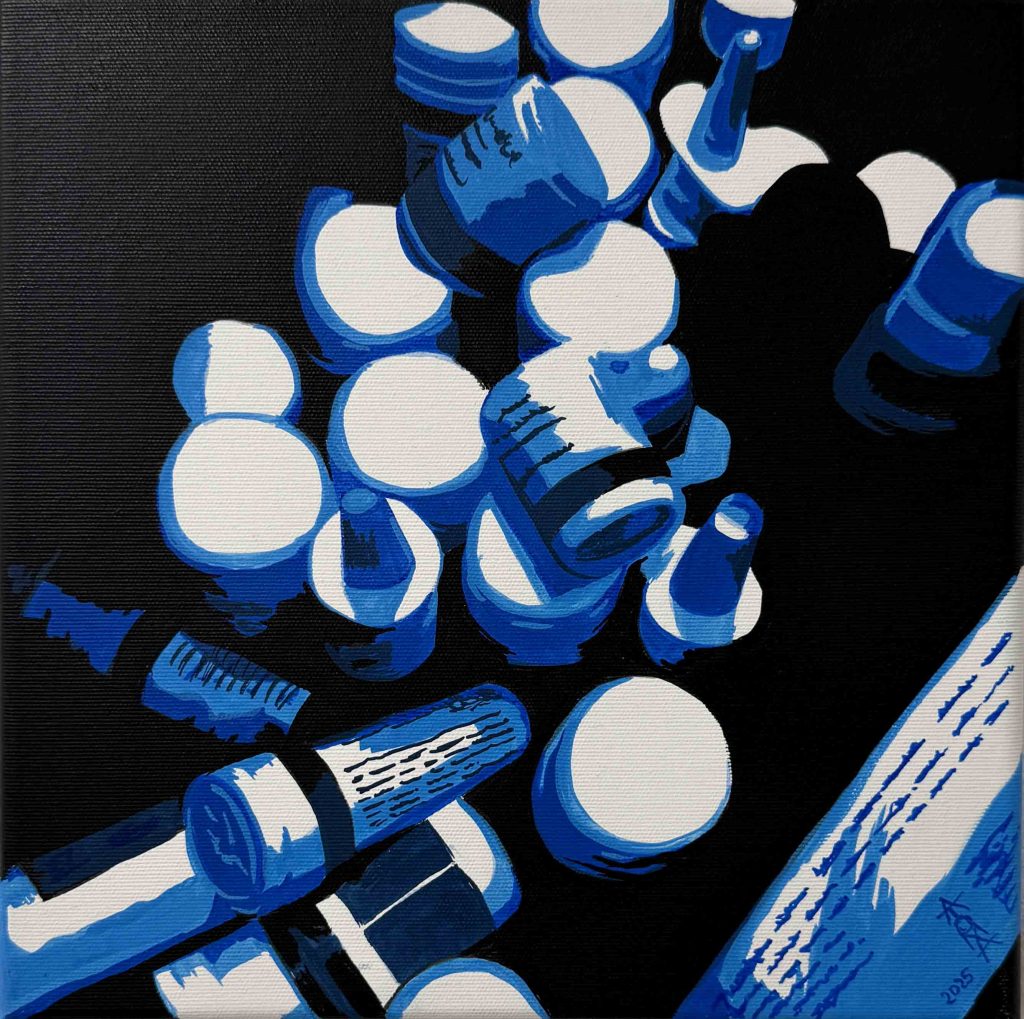
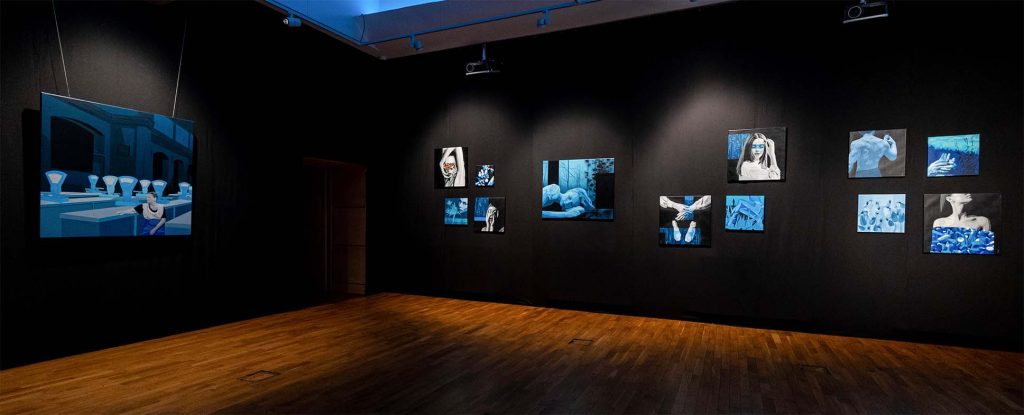
ATOMA examines a generation caught between the physical and digital worlds, living in a reality saturated with information and constant stimulation. In an era where attention has become a scarce resource, human connections dissolve into a stream of dopamine-driven reactions, while identity is continuously shaped under the pressure of technology. The exhibition continues the direction of the artist’s previous projects, exploring addiction as a paradox of the digital age. ATOMA highlights the fragile balance between dependence, control, and the search for meaning.
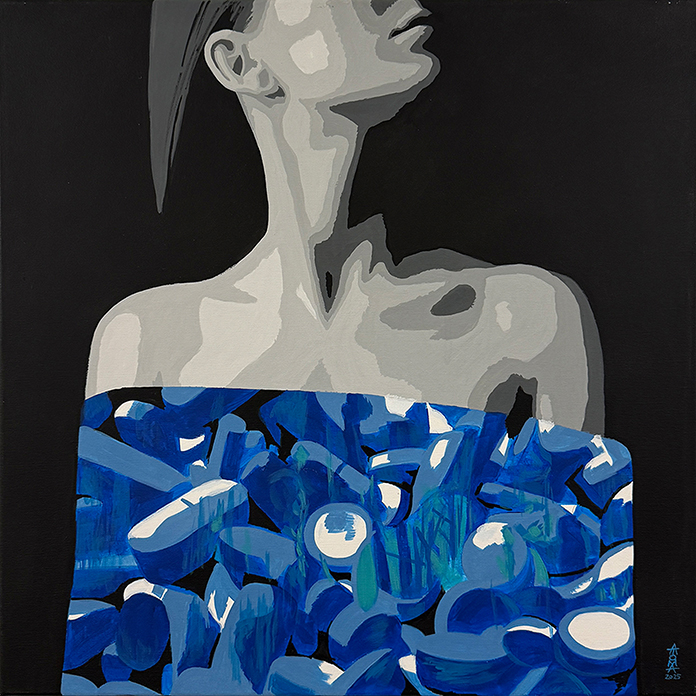
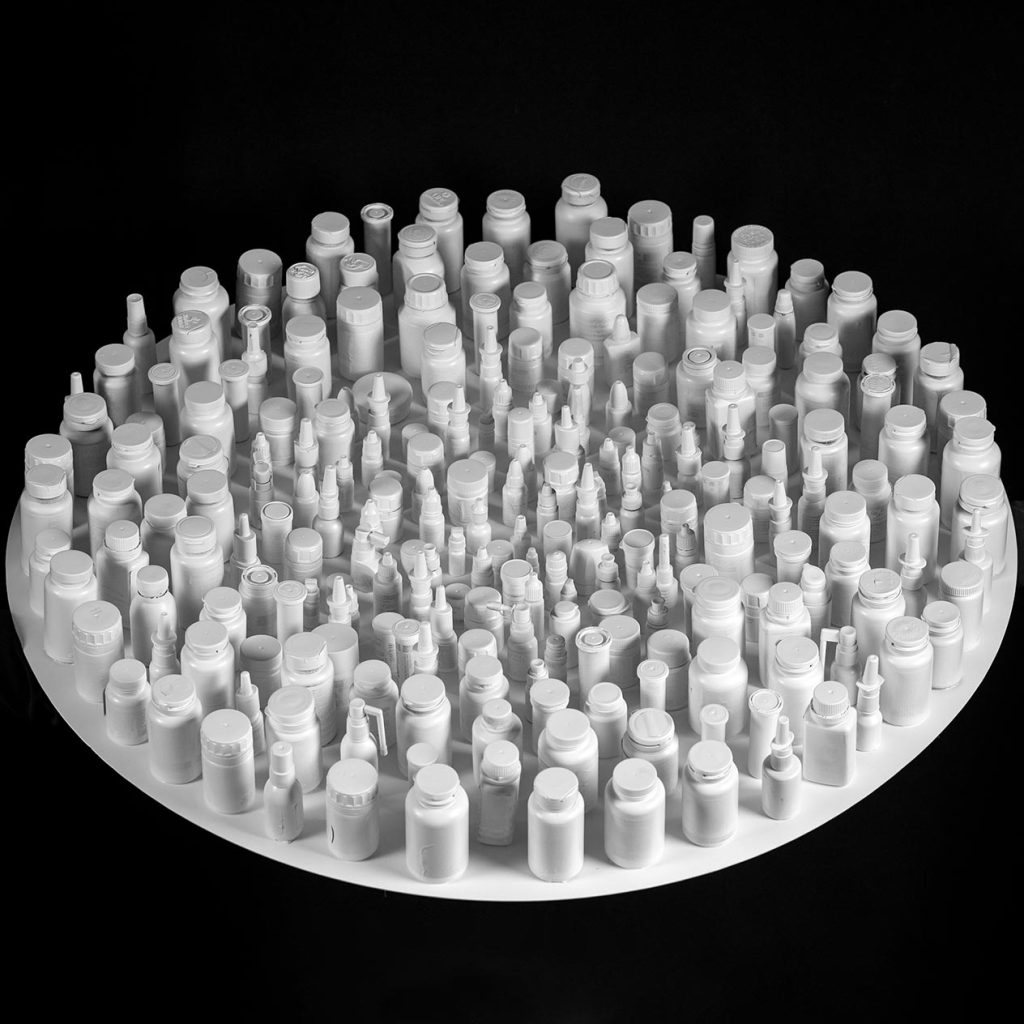
The current exhibition is dedicated to both addiction and its remedies. The acrylic works begin with the question: “What happens behind the phone?” and examine the subtle losses caused by attention captured by the screen. ATOMA highlights the diminishing perception of real-world details, social isolation, and the influence of digital design that encourages the pursuit of instant gratification, reducing patience, creativity, and critical thinking. The artist proposes a return to presence, to looking up from the screen, and to reconnecting with reality. In the medicine installation, the pill becomes a symbol of duality: suffering and healing, addiction and hope. Finally, the sensory video installation “What Do You Feel?” presents emotionally charged images that invite the viewer to respond to the question posed by the title. What we feel may reflect the relationship we have with pills.
The impact of technology and social media on the body, behavior, and psyche is becoming increasingly evident. Excessive use produces physical effects such as eye strain, poor posture, sleep deprivation, and changes in brain function, similar to those caused by traditional addictions. Online interactions activate dopaminergic pathways, triggering reward mechanisms comparable to those associated with nicotine, alcohol, or drugs. At the same time, medication can alter brain chemistry to manage withdrawal symptoms or compulsive urges, emphasizing the fragile balance between regulation and (over)control. Today, behavioral addictions — scrolling, notifications, and compulsive content consumption — are recognized as part of a new psychosocial ecology. Pharmaceutical technology responds to disorders generated by digital society itself, creating treatments for anxiety and depression associated with hyperconnectivity. However, in the constant pursuit of optimization and self-control, addiction can generate further dependence, and the exhibition invites us to reflect on this spiral.
Text by Daniel Kozak